
The role of the language professional has never been static. The craft of translation and interpreting have long been at the heart of the field but, in the last few decades, the industry has grown into a vibrant ecosystem: voiceover, subtitle localization, video game localization, and countless other specializations. Each new branch has enriched the profession, proving that language is not just a skill but a gateway to the entire world.
Now we find ourselves at another turning. The rise of AI is sparking both fear and fascination. It challenges traditional methods but also opens doors to new opportunities. It’s no longer a question of whether AI will impact the profession—it already has. What we need to be asking is: What’s the plan?
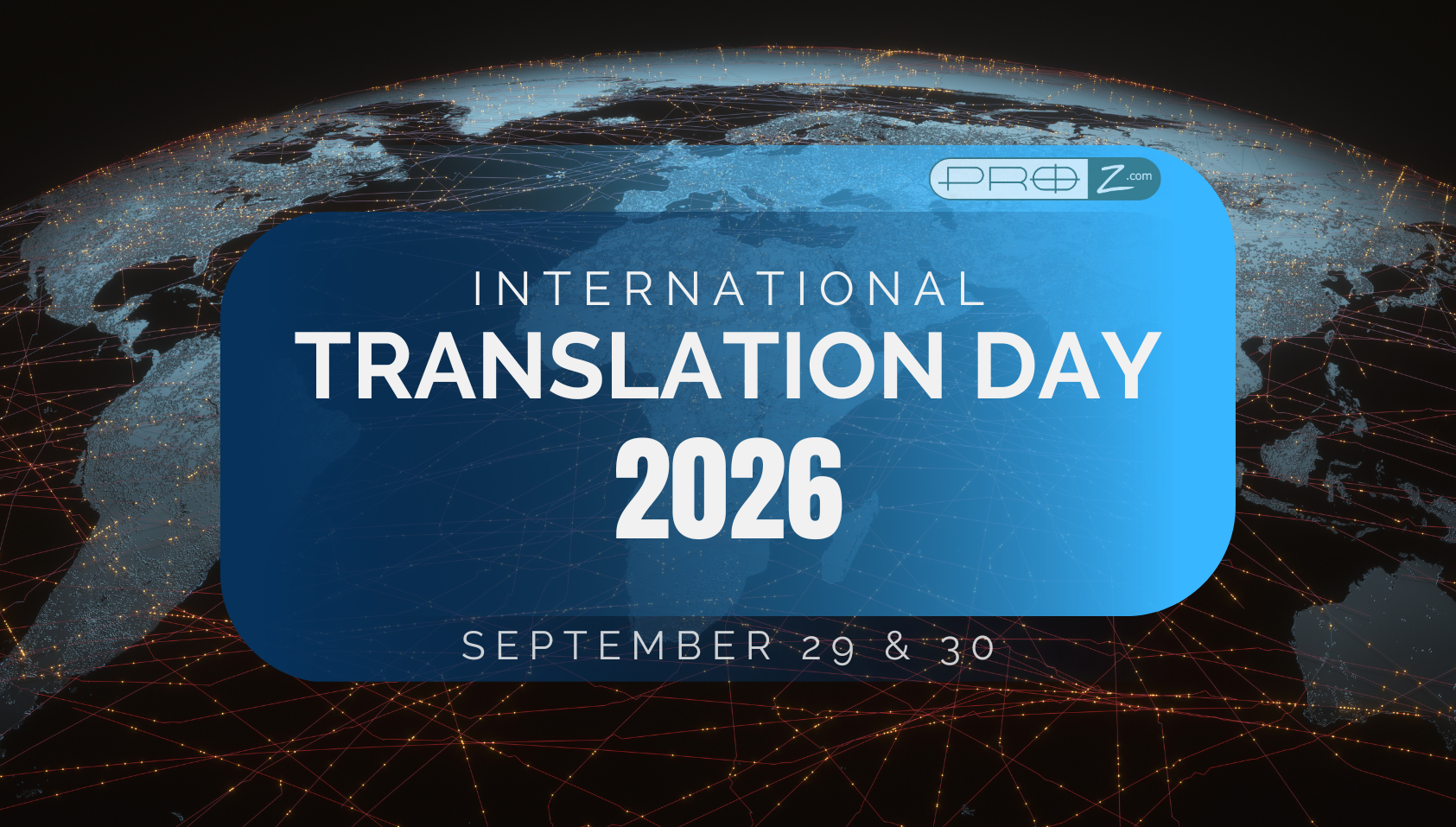
That’s the theme of International Translation Day 2026: Future in focus, ProZ.com’s biggest annual event celebrating translators, interpreters, and all language professionals. This year, the spotlight is on the future—on the choices each professional faces and will face in the industry.
What can be done?

In the International Translation Day 2026 event, three main ways will be explored. You can stay, evolve, and/or pivot.
What does it mean to simply stay? In a landscape where AI translation and automated systems are rapidly becoming the baseline, choosing to remain completely static is the negative alternative. Refusing to navigate these new waters risks stagnation, job displacement, and being left behind as client expectations move forward.
What about evolving? You can continue in the language profession while diversifying your services, deepening your expertise, and embracing lifelong learning. Evolving means integrating AI as a tool rather than viewing it as a threat. It means specializing in high-demand niches like post-editing, cultural consulting, or terminology management, and upgrading your workflows. Staying in the industry shouldn’t mean standing still; it means actively adapting and growing alongside the technology
And what if you decide to pivot? Pivoting doesn’t specifically mean leaving the language industry completely. Instead, it’s about merging your transferable skills into new, emerging roles—such as AI workflow architecture, localization strategy, or quality systems design. Alternatively, you might explore an entirely different career path while keeping your language and translation services as a profitable side job. Pivoting means carrying your deep linguistic expertise into a fresh context where those skills remain highly valued.
All these paths (and the realities behind them) will be explored during International Translation Day 2026.
Join us on September 29 and 30 for a free live event streamed worldwide. Over a dozen industry experts will share strategies, case studies, and inspiration.
Register now to attend for free and watch the sessions live.
This is the moment to celebrate the incredible work of every language professional, and to put the future in focus.
0 Comments